
Garry Martin, Director of Economic Development, Information Systems and Emergency Services at Donegal County Council, chairs the local authority's severe weather team. He has held this role for 16 years and emphasises a calm, measured approach to leading the council’s response to emergencies. "We never get too flustered," Martin says. "You plan for it, prepare for it, have all of your ducks lined up and respond as best as you can."
The council receives warnings from Met Éireann several days in advance in approximately 95 out of 100 cases. Ahead of major storms, the National Directorate for Fire and Emergency Management holds national meetings attended by local authorities, the Defence Forces, and utility companies. Each local authority then conducts its own assessment, moving resources such as sandbags and pumps to flood-prone areas and closing car parks before the weather arrives.
The severe weather assessment team brings together representatives from roads, fire services, Civil Defence, housing, community services, and communications. Martin notes that storms are becoming more frequent and intense. Ten years ago, emergency planning accounted for about 10% of an assistant chief fire officer's time; now it takes about 80%.
During a major storm, the local authority leads the response at the local level, working with the Gardaí, the HSE, and the ESB. Senior staff from these organisations meet in regional groups to maintain critical links. Martin stresses that these connections must be established before incidents occur. Local authorities also share resources with each other, supported by a central national database established during the review of Storm Éowyn.
In the aftermath of Storm Éowyn, power cuts were the primary challenge in Donegal. Martin’s own home was without power for six days. Volunteers from Civil Defence visited vulnerable people to provide medicines, food, and warmth. For areas with prolonged outages, the local authority opened community support centres equipped with generators, allowing residents to charge phones and receive hot meals.
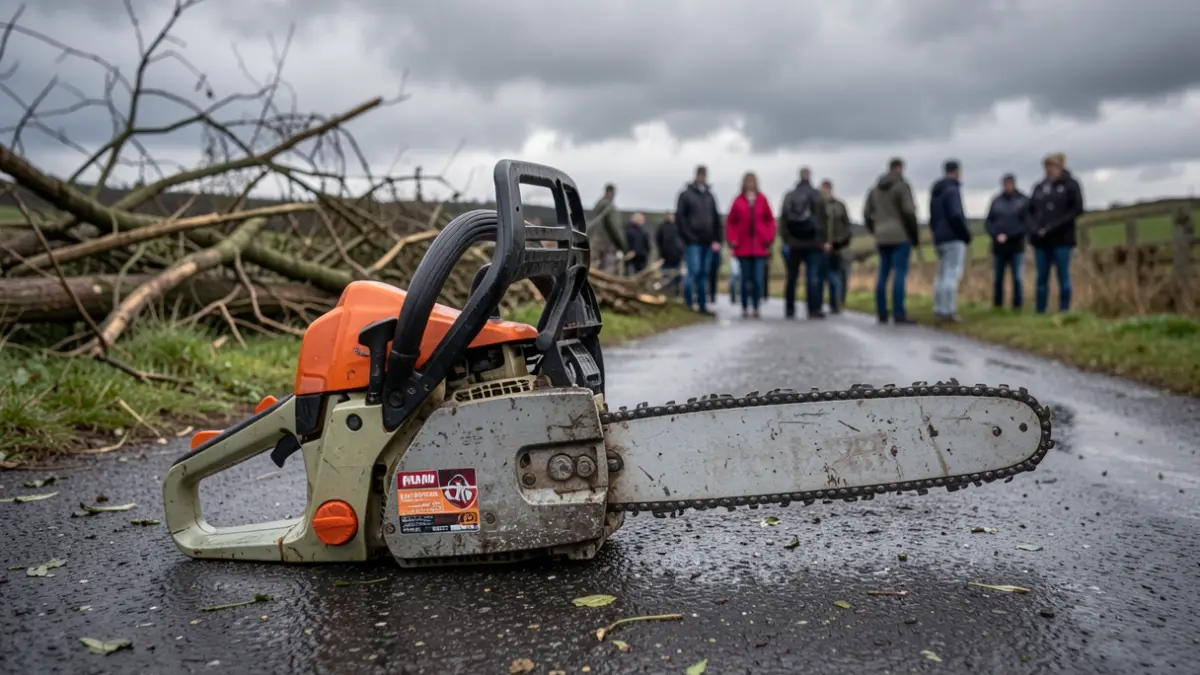
Local authorities now serve as the contact point for national support schemes. Residents with flooded homes can be connected with the Department of Social Protection for the Emergency Response Payment, while businesses can access the Emergency Humanitarian Flooding Scheme administered by the Irish Red Cross. The council also reviews its own performance; following Storm Éowyn, a report led to the decision to carry a chainsaw on every fire engine in Donegal.
Public information is managed by the communications unit, which is part of the severe weather assessment team. Gerry McDermott, Head of Communications at Fingal County Council, chairs the communications group for major emergency planning in the east region. He notes that Storm Éowyn highlighted the need for alternative communication methods when power and mobile networks fail, with local radio and postal workers playing key roles in reaching vulnerable communities.
The council also manages summer risks, such as wildfires on high ground. In hot, dry weather, dead grass creates a fire load that can be dangerous even for fire crews. In these situations, the local authority calls in helicopters from the Air Corps or private companies and uses drones to locate fires without risking personnel.