
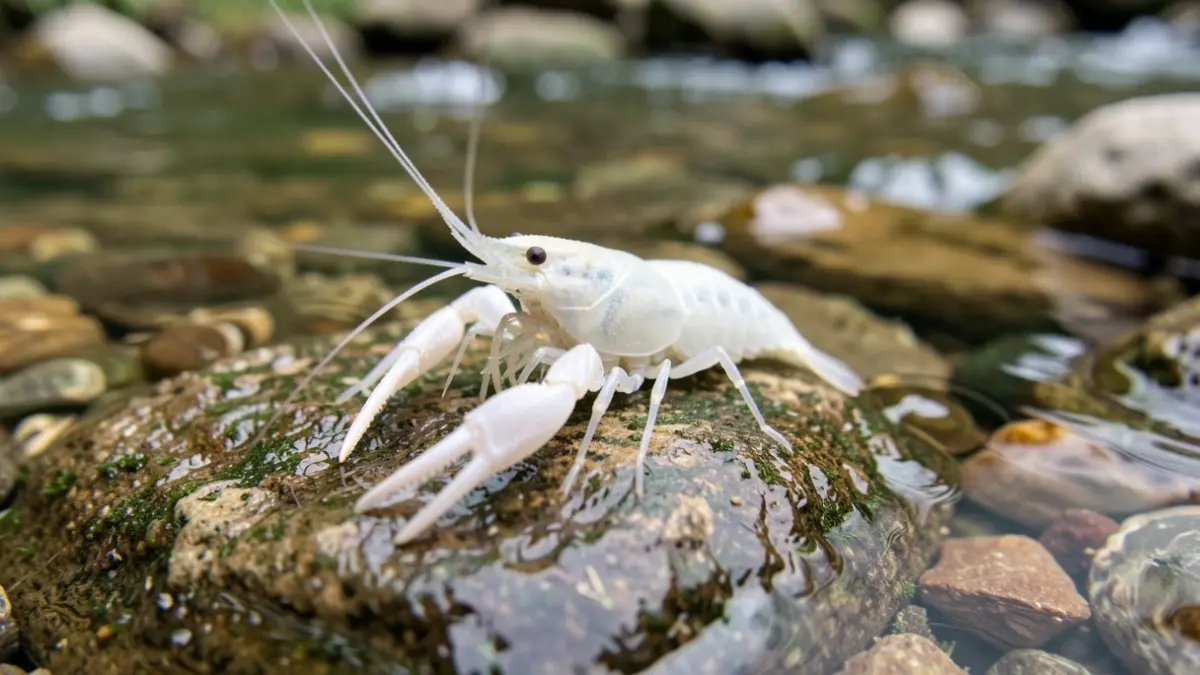
The project will be led by Dublin Zoo and Fota Wildlife Park in partnership with the National Parks and Wildlife Service (NPWS). It involves the development of bio-secure hatchery facilities designed to safely breed and raise crayfish while protecting them from disease. The initiative also supports research, conservation actions, and public awareness programmes.
Minister O’Sullivan highlighted that Ireland remains one of the species' remaining strongholds in Europe. The investment aims to safeguard the species by establishing secure populations and supporting long-term recovery efforts. Healthy crayfish populations are seen as an indicator of healthy rivers, and protecting the species helps strengthen freshwater ecosystems and the wildlife that depend on them.
“"This partnership between National Parks and Wildlife Service (NPWS), Dublin Zoo and Fota Wildlife Park marks an important step in securing a future for Ireland’s threatened, White-clawed Crayfish."
Dr. Andrew Mooney, Conservation and Science Manager at Dublin Zoo, noted that increasing outbreaks of crayfish plague continue to place populations at risk. Dublin Zoo, home to the IUCN Centre for Species Survival: Ireland, is bringing its expertise in population management, species husbandry, and conservation breeding to support the recovery of the native species.
Aileen Tennant, Director of Fota Wildlife Park, stated that the park played a key role in 2024 by rescuing the last known White-clawed Crayfish in the River Blackwater catchment. Since then, the park has successfully bred the threatened native species in its purpose-built aquatic facility, rearing more than 150 young crayfish this year alone.
Suzanne Nally, Director of Nature Conservation at NPWS, described the project as a combination of scientific expertise, practical conservation action, and strong partnerships. The four-year project is currently underway and is scheduled to run until 2029.